Kari
When my mother saw the pair of Kuvasz dogs at Herberstein Zoo in Eastern Styria, she instantly fell in love. The zoo’s director had to promise her a female pup from the 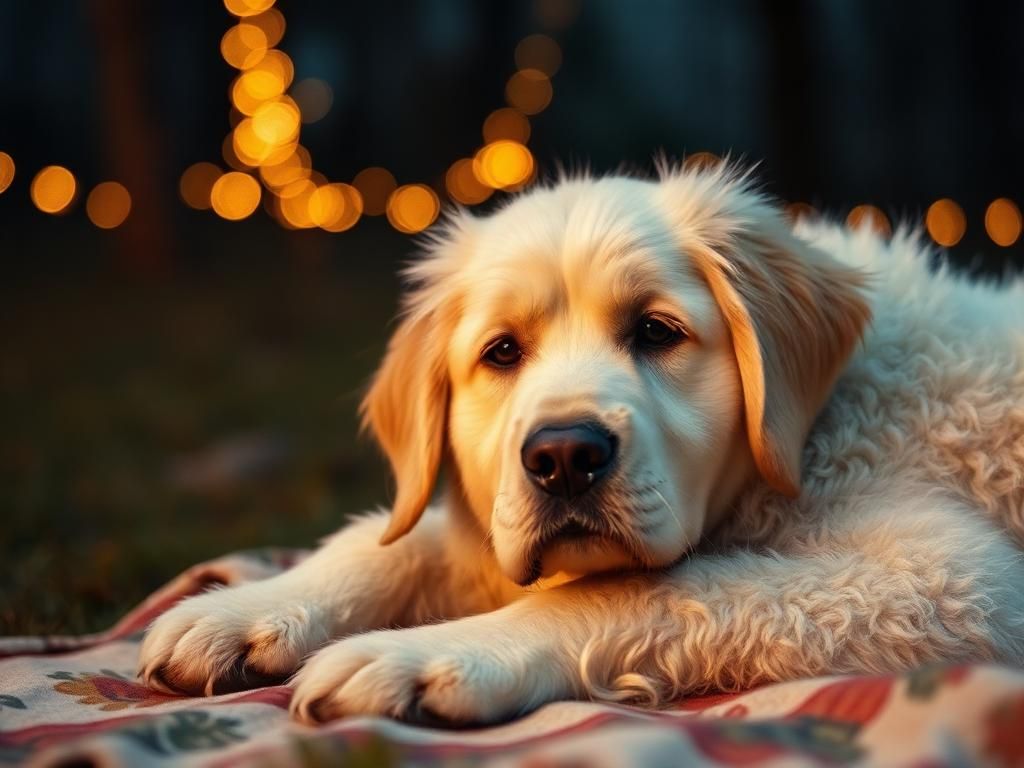 next litter. A few months later, the call came: “Your little one has arrived and will be ready to collect in about eight weeks.” Unfortunately, the pickup was delayed because my parents were about to leave for holiday, so eight weeks turned into twelve.
Mum and I went to fetch our new family member. The little dog was utterly distraught and confused when she was roughly taken from her family and handed to us. My mother refused my offer to drive, so I sat in the back seat with the pup. Immediately, she nestled her nose into my armpit, and that’s how we stayed for the entire hour-and-a-half journey home. That was the beginning of a ten-year friendship.
Kari was a timid girl, harshly corrected by her parents and completely unfamiliar with the human world. She was afraid of everything in a normal household—even the hum of the fridge. So, the first thing I did was take her on a tour of the house, touching all the appliances to show her they were harmless. That calmed her a little. But when my mother tried to get her used to sleeping alone in a separate room on the ground floor, Kari panicked. I put my foot down, and she was given a place in the hallway of my parents’ flat. Still, she always spent the night between their bedrooms.
A large area of the property was fenced off for her to roam. She tried to escape a few times, and once, when I stopped her, she snapped at me—but only once. After that, she understood I outranked her. That was the only time I ever handled her firmly. Kari was a clever dog: stubborn and strong-willed, but eager to please and do the right thing. When she refused to walk on a lead with my mother, I put a slip chain on her, attached the lead, and crouched down in front of her. Calmly, I explained why it was necessary and showed her how the chain worked. After half an hour or so, I asked, “Shall we try?” and she walked beside me without a fuss. You could talk to her like a sensible child. She loved walking with my husband most of all—they were kindred spirits.
She got on wonderfully with our pony. The two were the best of companions, often playing tag. I was amazed at what our Joggele learned from her: as a herding dog, Kari could sprint from a standstill at full speed, and the pony practised until he could gallop off just as quickly. Kari would also dart in sharp turns when the pony chased her—until he mastered the same moves. The two adored each other and were nearly inseparable. Only when Kari grew old did we stop leaving them unsupervised, as the horse might have accidentally hurt her as her agility and strength faded.
Like most herding dogs, Kari was gentle and accepted everyone and everything we introduced to her. Yet she remained watchful, always keeping an eye on us. She recognised my father’s car by its sound, just as she did mine.
She also had a special bond with my husband. Whenever he worked in the yard or garden, she was by his side, lying close to him, enjoying the quiet companionship. She was happiest when the whole family gathered around the dinner table, chatting. Then she’d lie under the table, rest her head on someone’s feet, and fall asleep.
Sadly, Kari didn’t live to a ripe old age. At around ten, she fell ill. The vet told us she had cancer and her organs were failing—I’d already noticed she couldn’t relieve herself properly. He offered to keep her alive for another ten days or so, but I couldn’t bear that. With a heavy heart, I decided to let her go, and Kari passed away peacefully in my arms.
Dear, good Kari, I hope there’s a beautiful place for our animal friends in the afterlife, where you can be utterly happy. You will always live on in our hearts and are truly unforgettable.